


Solitaire Fairytale
MAD Studios, s.r.o.
Solitaire Fairytale takes the familiar patience format and gives it a much larger sense of progression than a typical quick card game. I found its main appeal in the combination of classic solitaire-style play and a long sequence of illustrated stages. The game is free to start, rated for Everyone, and developed by MAD Studios, s.r.o., so it is easy to approach whether you want a quiet break or a more regular puzzle routine.
What makes it worth discussing is not simply that it contains many card layouts. The important capability is the way its level-based structure turns individual solitaire hands into a continuing journey. Instead of opening the app only when I have a few spare minutes and then forgetting it, I always have a clear sense of moving through a larger collection. That changes the mood from an isolated card game into something closer to a gentle progression game.
Why the level-based format matters
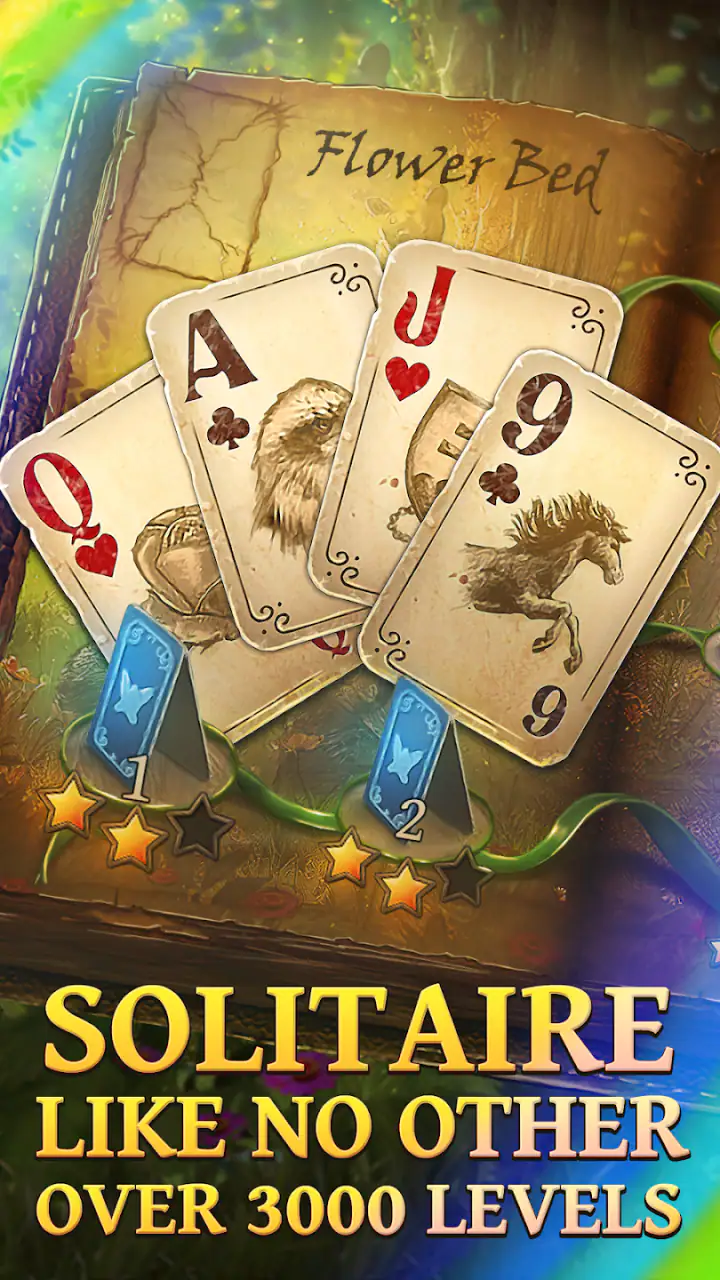
The central idea is straightforward: you play solitaire across a large collection of levels, with artwork providing a visual theme around the card tables. The store summary points to more than three thousand levels, but the practical effect is more important than the size itself. A large level library means the game is designed for repeated visits rather than a single afternoon of experimentation.
I like this approach because solitaire can otherwise become a little anonymous. In a basic card app, every round may feel disconnected from the last. Here, the level structure gives each successful hand a place in an ongoing route. Even when the underlying decisions remain familiar, the surrounding presentation gives me a reason to continue.
This is still best understood as a casual card game, not a deep strategy title. The pleasure comes from reading the available moves, exposing hidden cards, managing the stock, and deciding when to take a safe move instead of a tempting one. The fairytale presentation softens the experience, but it does not remove the small decisions that make solitaire satisfying.
Related News

Threads in Real Life: Who Should Join, Lurk, or Leave

How SHEIN Turned Shopping Into an Endless Content Feed

How to Make Fortnite Feel Smarter on Mobile

Should You Switch to Microsoft Outlook on Mobile?

Why Gallery Keeps Pulling Users Back

X Review: Why Its Network Still Matters
The game has been available since late 2018 and remains listed in version 2026.20. That matters to me mainly because it places the app in the category of an established mobile game rather than a brand-new experiment. Its audience also seems substantial: it has passed half a million installs, with an average rating of 4.4 from roughly 7.8 thousand ratings. Those figures do not guarantee that every player will enjoy it, but they suggest that the format has found a dependable audience.
What I actually do during a level
In play, I focus first on uncovering face-down cards. That usually means comparing several possible moves instead of automatically placing the first available card. A move that looks productive can sometimes block a more useful sequence, so I try to think one or two steps ahead. This is where the game feels more involving than a purely decorative card screen.
The best habit I developed was to pause before emptying a column or committing a long run. When several cards can be moved, I check which choice reveals hidden information and which one preserves flexibility. That small pause is especially useful when I am playing quickly on a phone and my first instinct is simply to tap the most obvious option.
Gallery
The level format also makes short sessions work well. I can play one hand while waiting for a kettle to boil, during a commute when I am seated, or before bed when I do not want something noisy or demanding. A longer session feels natural too, because completing one level encourages me to try the next rather than forcing me to search for a new activity.
For a realistic everyday example, I would use it during a lunch break when I want a mental reset but do not want to enter a competitive multiplayer match. I can concentrate on the current layout, make a few careful decisions, and stop when the break ends. That is a better fit for my routine than a game that punishes interruption or expects me to remember a complex story.
How the visual theme changes the experience
The artwork is not just a technical label attached to a card engine. It gives the progression a softer, more inviting identity. I noticed that this makes the game easier to recommend to someone who finds plain solitaire screens dull. The presentation helps the individual levels feel like parts of one experience instead of repeated copies of the same table.
At the same time, anyone choosing this game primarily for visual spectacle should keep expectations sensible. The core activity remains moving cards. The artwork supports the routine; it does not transform solitaire into an adventure game with a separate action system. I see that as a strength when I want calm repetition, but it may feel limited if I need constant novelty.
The interface is most comfortable when I treat it as a deliberate tap-and-think game rather than a speed challenge. On a small phone screen, rushing can lead to accidental selections or missed possibilities, while a slower rhythm lets me read the layout properly. I would recommend adjusting the pace before deciding whether the game is too simple. Much of its satisfaction comes from making the right move at the right time.
Where Solitaire Fairytale fits best
Its strongest scenario is a player who likes solitaire but wants more motivation than an endless series of unrelated hands. The level path provides a practical reason to return, while the fairytale styling keeps the experience warmer than a bare-bones card utility. I think it works particularly well for relaxed evening play, quiet breaks, and anyone who enjoys gradual completion rather than a dramatic finish.
It is also suitable for people who prefer games that can be understood immediately. I did not need to learn a large set of controls or memorize a complicated ruleset before getting started. The challenge grows from the layout and the decisions, not from an expanding control scheme. That makes it approachable for casual players and for people returning to solitaire after a long break.
The Everyone content rating reinforces that broad accessibility. I would still describe the game as a better fit for players who enjoy patience and repetition than for very young children looking for fast visual action. The rating speaks to general suitability, while the actual appeal depends on whether arranging cards feels relaxing or tedious to you.
Compared with a traditional solitaire app, this one offers more atmosphere and a stronger sense of progression. A plain alternative may be preferable if you want the quickest possible launch, a stripped-down interface, or a card table without decorative framing. On the other hand, compared with a competitive card game, Solitaire Fairytale is much less stressful because the focus is on your own decisions rather than an opponent’s pressure.
That difference is important. I would not choose it when I want social play, bluffing, or a match with changing human behavior. I would choose it when I want a self-contained puzzle that lets me control the pace. People who normally abandon solitaire after a few rounds may find the level journey helpful, although the repeated structure can still become familiar over time.
Small habits that improve the experience
My first useful tip is to treat every exposed card as information, not merely as a reward. Sometimes the most valuable move is the one that reveals what is underneath, even if it does not create the longest immediate sequence. This way of thinking reduces the number of turns where I trap myself by chasing a visually satisfying move.
Second, I avoid spending help or recovery options automatically when the game makes them available. I prefer to inspect the layout again, because a short pause often reveals a move I overlooked. Saving assistance for genuinely uncertain moments makes the level feel more like a puzzle and less like a sequence of prompts to follow.
Third, I use the level structure as a stopping point. Instead of playing until I become careless, I finish a hand and take a break. Solitaire decisions become noticeably less enjoyable when I am tapping without looking, so treating completed levels as natural pauses helps preserve the calm quality that attracted me in the first place.
These are not complicated techniques, but they change how the game feels. The app is more rewarding when I play thoughtfully, and less rewarding when I try to force it into a fast arcade rhythm. That distinction is easy to miss from the short store description.
The cost of a free starting point
Solitaire Fairytale is free to download and play, but it includes in-app purchases ranging from $0.99 to $49.99 per item. I see that as the main practical trade-off for anyone comparing it with a completely self-contained solitaire app. A free entry point lowers the barrier to trying the game, while the purchase range means players should pay attention before buying anything during a longer session.
My advice is simple: begin with the free experience and decide whether the level progression genuinely adds value to your routine. If you only want occasional solitaire, there may be little reason to spend money. If the artwork and continuing route keep you returning regularly, optional purchases may feel more relevant, but they should remain a conscious choice rather than an automatic part of play.
The game also asks for patience in another sense. A large level collection is useful only if you enjoy the basic card loop. It cannot solve the fundamental problem of repetition for someone who needs frequent changes in rules or genre. I would skip it if I already know that conventional solitaire loses my attention quickly, even when presented with a themed progression.
Device compatibility is reasonably broad for a modern mobile game because it supports Android versions from 6.0 onward. That makes it accessible to many older devices, although the actual comfort of play will still depend on screen size and performance. I would test the card readability on an older or compact phone before committing to long sessions, especially if I prefer precise taps.
Who gets the most from this card game
The best audience is someone who wants a low-pressure daily game with a visible sense of advancement. You may enjoy it if you like solitaire rules, attractive presentation, and the satisfaction of clearing one stage before moving on. It is particularly appealing when you want something that can fill five minutes without demanding your full attention for an hour.
It also suits players who like gentle goals but do not want a story-heavy mobile game. The fairytale identity gives the collection personality without requiring me to follow dialogue or manage a complicated world. That balance is one of the app’s clearest strengths: it makes a familiar card activity feel more inviting while leaving the rules easy to understand.
I would point a different player toward a more traditional alternative if they care most about speed, minimal menus, or a completely plain card table. I would also suggest looking elsewhere if the priority is multiplayer competition, advanced deck-building, or a constantly changing strategic system. This game’s value comes from refinement and continuity, not from reinventing solitaire.
After spending time with it, my honest view is that Solitaire Fairytale succeeds because it understands what makes casual solitaire durable: simple rules, small decisions, and a reason to return. The large level journey and artwork give those familiar decisions more context, while the free entry makes trying it uncomplicated. The purchase options and repetitive foundation are worth considering, but neither undermines the core experience for the right player.
For me, the deciding question is not whether it contains enough content; the level collection is clearly built for long-term play. The better question is whether I want my solitaire to feel like a continuing activity rather than a disposable time filler. If the answer is yes, I would recommend giving Solitaire Fairytale a chance. It is calm, accessible, and most enjoyable when played at a thoughtful pace, one carefully considered level at a time.
FAQs for Solitaire Fairytale
What is Solitaire Fairytale, and how is the game played?
Solitaire Fairytale is a casual card game that combines classic solitaire-style gameplay with a storybook presentation. You generally clear cards from the board by placing them in sequence, while progressing through levels and unlocking new parts of the fairytale world. The exact rules, available layouts, and objectives can vary between stages, so each level may require a slightly different strategy rather than simple repetition.
Is Solitaire Fairytale free to download and play?
Solitaire Fairytale can typically be downloaded for free, allowing players to begin the adventure without an upfront purchase. However, free-to-play games commonly include optional in-app purchases for coins, boosters, extra lives, or other conveniences. Some versions may also display advertisements. Before downloading, check the store listing for the current pricing, advertising policy, and purchase options available on your Android or iOS device.
Does Solitaire Fairytale require an internet connection?
The basic solitaire levels may be playable without a constant internet connection, which is useful when traveling or playing in areas with limited coverage. Nevertheless, an internet connection may be needed for advertisements, cloud synchronization, special events, updates, rewards, or in-app purchases. Offline availability can also depend on the version installed, so it is best to test the game after installation before relying on it without mobile data or Wi-Fi.
Is Solitaire Fairytale suitable for children and families?
Solitaire Fairytale has a colorful, relaxed presentation that may appeal to casual players and families, but suitability depends on the age rating and the content available in the current release. Parents should review the store classification, advertising, in-app purchase settings, and any data-collection information before allowing younger children to play. If children use the game, enabling purchase restrictions is a sensible precaution.
What should I know about advertisements, purchases, and game progress?
Solitaire Fairytale may use advertisements and optional purchases to support its free-to-play model. These can include rewarded videos, currency bundles, boosters, or items that help players continue after difficult levels. Game progress may be stored locally or synchronized through an account or platform service, depending on the version. To avoid losing progress, review the available backup or sign-in options and make purchases only through the official app store.
Pros
- Relaxing solitaire gameplay with a charming fairytale theme.
- Simple controls make it accessible for casual players.
- Short levels are convenient for quick gaming sessions.
- Progression and rewards add motivation beyond standard solitaire.
- Works well for players who enjoy light
- story-driven puzzle games.
Cons
- Gameplay may feel repetitive after extended playing sessions.
- Some features or rewards may depend on watching advertisements.
- Difficulty balance can vary between levels and challenges.
- The fairytale presentation may not appeal to traditional solitaire fans.
- Progress may feel slow without spending extra time on daily activities.


